“Conservation is for the people.”
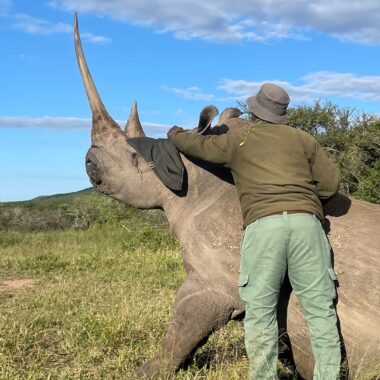
It’s a line Kganya Moseneke repeats often, and it shapes every decision he makes at Great Fish River Nature Reserve. As Security Manager on a World Bank–backed rhino protection project of 45,000 hectares, he works in a landscape bordered by 14 rural communities, where protecting black rhinos starts with understanding the pressures on the people who live alongside them.
Kganya was born in Johannesburg, raised by a single parent, and spent part of his childhood living with his grandmother in the North West province before returning to Gauteng at 13. The bush wasn’t something he grew up in; it was something he actively sought.
“I started volunteering at an early age for conservation NGOs,” he says. “From there, I just knew exactly what I wanted to do.”
He went on to study nature conservation, completing a diploma at the University of Technology while doing his practicals with South African National Parks. That’s where he first stepped into the world of anti-poaching.
“I was selected from the general field ranger teams to the first APU team that was established in our area cluster,” he explains. “I tried at some point to move away from it, to be exposed to other aspects of conservation, but over the past four years I just found myself back at it again.”
His role at Great Fish focuses on growing and protecting the reserve’s black rhino population. “It’s a five-year contract,” he says. “I’m more focused on the security and reinforcement aspect of it.”
That work unfolds in one of the most challenging contexts in South African conservation.
Fourteen communities and a hard reality
Great Fish River Nature Reserve is not a remote island of wilderness. It’s bordered by 14 rural communities, stretching from Fort Brown through Alice to small settlements further east. Most of the people living there survive on government grants or irregular work. Jobs are scarce. Food is often scarcer.
“Down this side, conservation is more for survival,” says Kganya. “There’s a lot of poaching. Sometimes, when you arrest someone and follow up, you trace them back to their houses. You get there, and you find nothing on the table, literally. There’s no fridge. There’s nothing.”
Meat poaching is therefore constant. It’s driven not by syndicates, but by hunger. “People don’t have food,” he says. “They’re under pressure to come in and get a bit of protein.”
Layered on top of that everyday pressure, sits something far more organised.
In recent years, as reserves further north have militarised their anti-poaching units, syndicates have slowly shifted their focus south. “The focus is shifting more towards down this side because we are more relaxed,” he says. “They’re taking advantage of the same tensions: poverty and inequality.”
Previously closed communities are now more vulnerable to outside influence. “Some are opening up to foreign nationals from Mozambique and Zimbabwe,” he says. “Some are harbouring these operations.”
It leaves the reserve in a difficult position: relying on communities for support while criminal networks exploit those same vulnerabilities.
A reserve built with, and for, the community
Eastern Cape Parks and Tourism Agency, like many conservation bodies, has felt the pressure of tightening budgets. “Given the current financial situation of the entity, most of the projects with communities have dwindled, and those initiatives have fizzled out,” says Kganya. “We’re quite reliant on external funding.”
Even so, Great Fish remains co-managed with local communities. Half the reserve is community-owned.
“It’s a pro and a con,” he says. “In terms of employment, we’re forced to appoint from these communities, and that’s a plus. At least people are getting some work from the reserve.”
On the eastern side, a new community-based reserve, fully owned by residents, has been established, generating revenue through legal hunting and easing pressure on Great Fish. “It’s at an early stage,” he cautions. “But it was envisioned to relieve some pressure.”
No model erases hardship, but every job and opportunity strengthens the social fabric that the reserve depends on.
A landscape that hides as much as it reveals
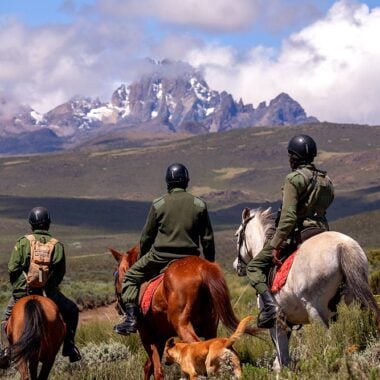
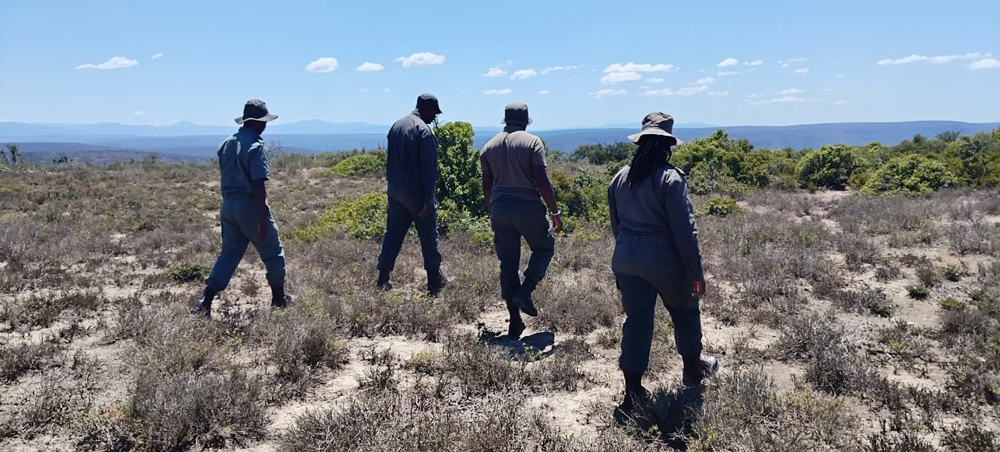
Great Fish River Nature Reserve is not an easy place to patrol. Its signature vegetation, Great Fish Thicket, is dense, tangled, and unique.
“In terms of this particular type of Fish Thicket, it’s unique,” says Kganya. “It’s found nowhere else. It’s mostly limited between here and a few other spots.”
That beauty comes with a cost for law enforcement.
“It’s quite thick,” he says. “It’s difficult to patrol and even to spot. If we lose an animal due to illness or poaching, it can take us a while to pick it up.”
In other reserves, Kganya leaned heavily on man-tracking skills: reading footprints, scuff marks, and subtle signs in the sand. Here, the terrain has forced a different approach.
In other reserves, he relied heavily on man-tracking. Here, the terrain forces a different tactic. “You lose tracks within minutes…within metres,” he says. “We rely heavily on dogs.”
The Great Fish River itself multiplies the stakes. It supplies farms downstream, linking rhino security directly to food security. “If our water quality drops, it affects everything,” he says.
The wildlife tells its own story. Great Fish is a stronghold for black rhinos, elands, and kudus. “Animals from here are hardy,” he says. “At auctions, Great Fish animals are highly sought after.”
Holding it all together
Against this backdrop, Kganya’s role as security manager stretches far beyond a desk. “I mostly plan ranger deployments,” he says. “Data collection, equipment, and managing relationships with donors.”
When a gunshot, snare report, or missing rhino comes in, he’s on the ground. “If there’s an incident, I go out, investigate, and bring the team up to speed.”
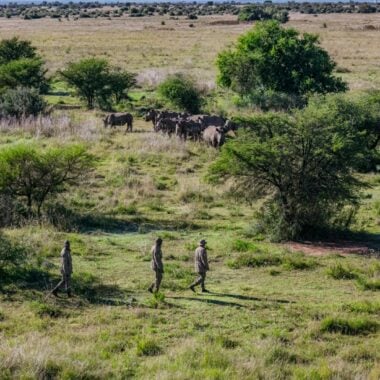
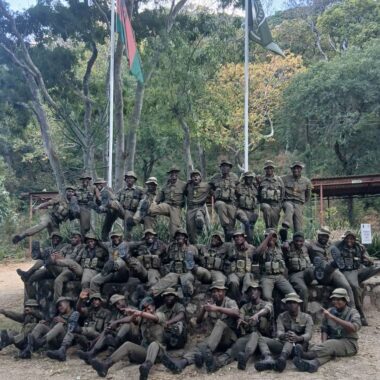
Great Fish currently has 39 staff in its protection network, including 28 core field rangers. Rhino monitors track births, deaths, and injuries, and conduct biweekly aerial counts. Field rangers patrol, gather data, repair fences, and continue training as Environmental Management Inspectors, giving them arresting authority.
Alongside SAPS and neighbouring reserves, Kganya facilitates joint operations weekly. “That’s the main focus from a law enforcement side,” he says.
Boots for a hard-working team
In a landscape this demanding, with this much ground to cover and so many pressures to juggle, basic equipment becomes critical.
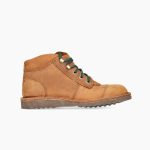
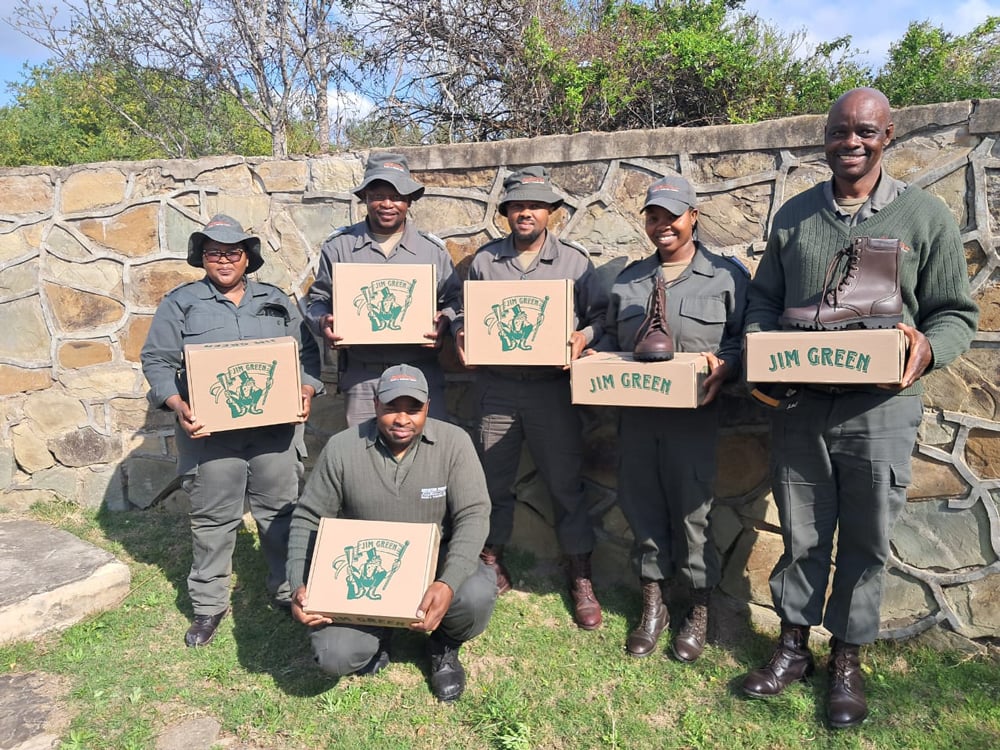
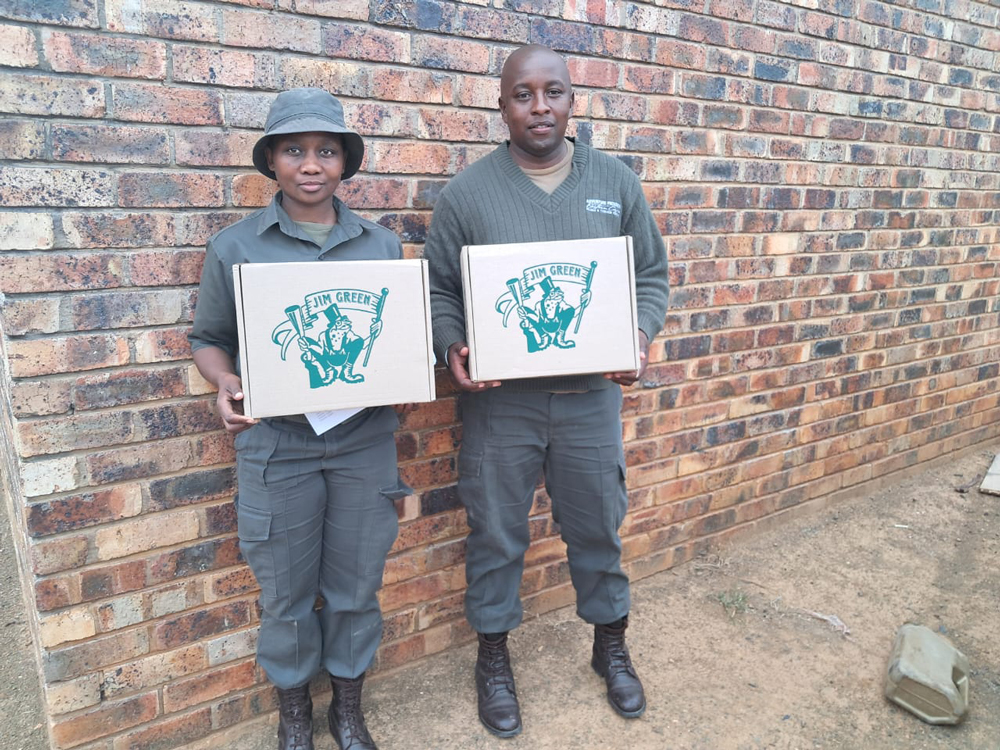
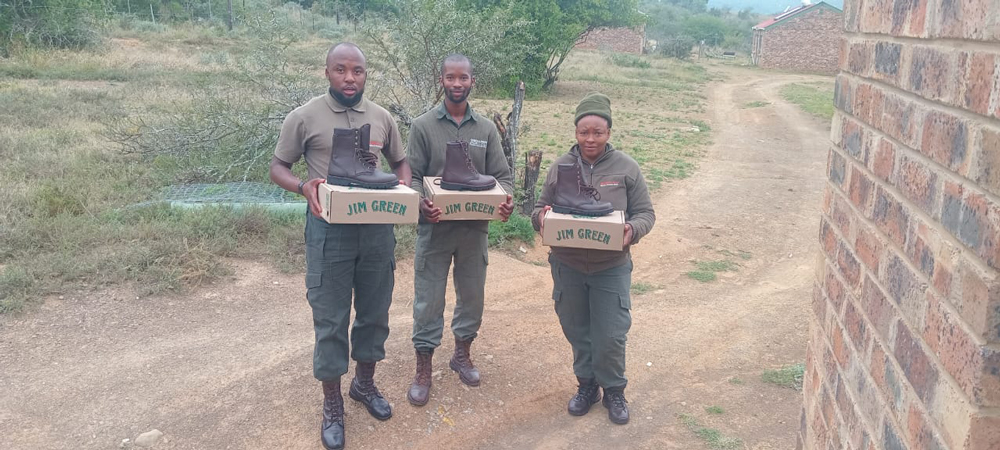
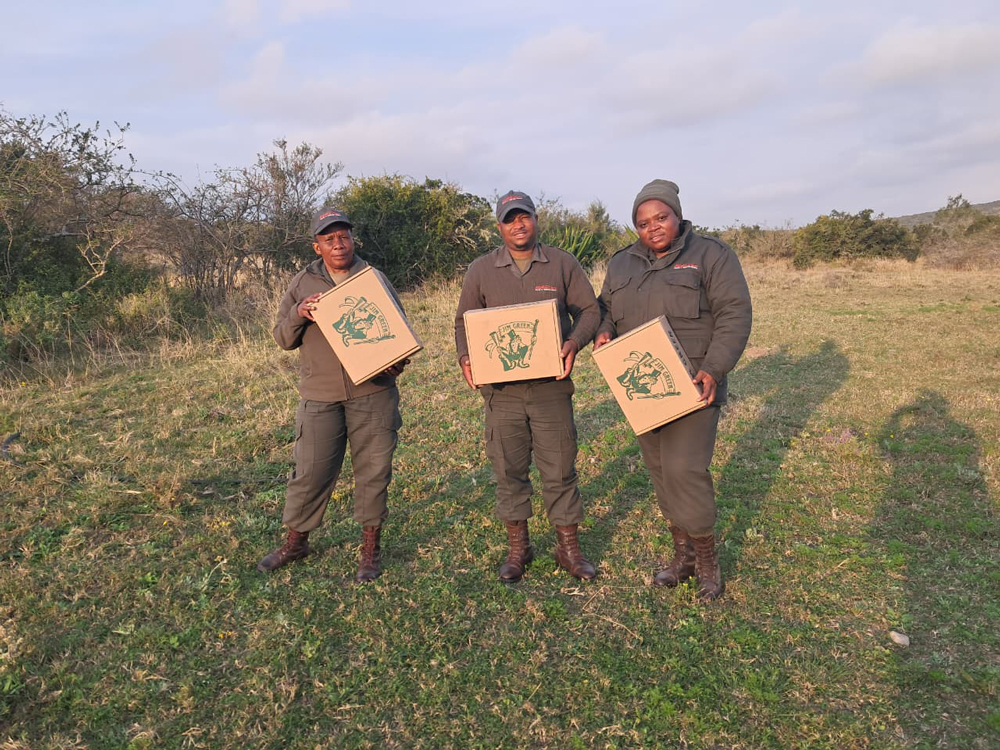
Through the Boots for Rangers initiative with the Game Rangers Association of Africa, Great Fish received 41 pairs of Jim Green boots. Kganya spread them across the entire frontline team: field rangers, rhino monitors, and supporting staff.
It might sound simple, but in a cash-strapped system, it matters. Every pair of durable, reliable boots means less strain on the budget, fewer injuries, and more time focusing on the work that counts: protecting rhinos, safeguarding water, and holding a fragile line between poverty, opportunity, and the wild.
Because for Kganya, conservation has never just been about animals.
“One thing I always impart is: conservation is for the people,” he says. “We must start there. That’s where the roots of conservation are.”
Cheers,
The Jim Green Team
Through our Boots for Rangers initiative, run in partnership with the Game Rangers Association of Africa, we donate one pair of boots to a ranger for every ten pairs sold from our Ranger range. These boots are now supporting conservation teams at sites across Africa, with over 6,000 pairs already on the ground.